
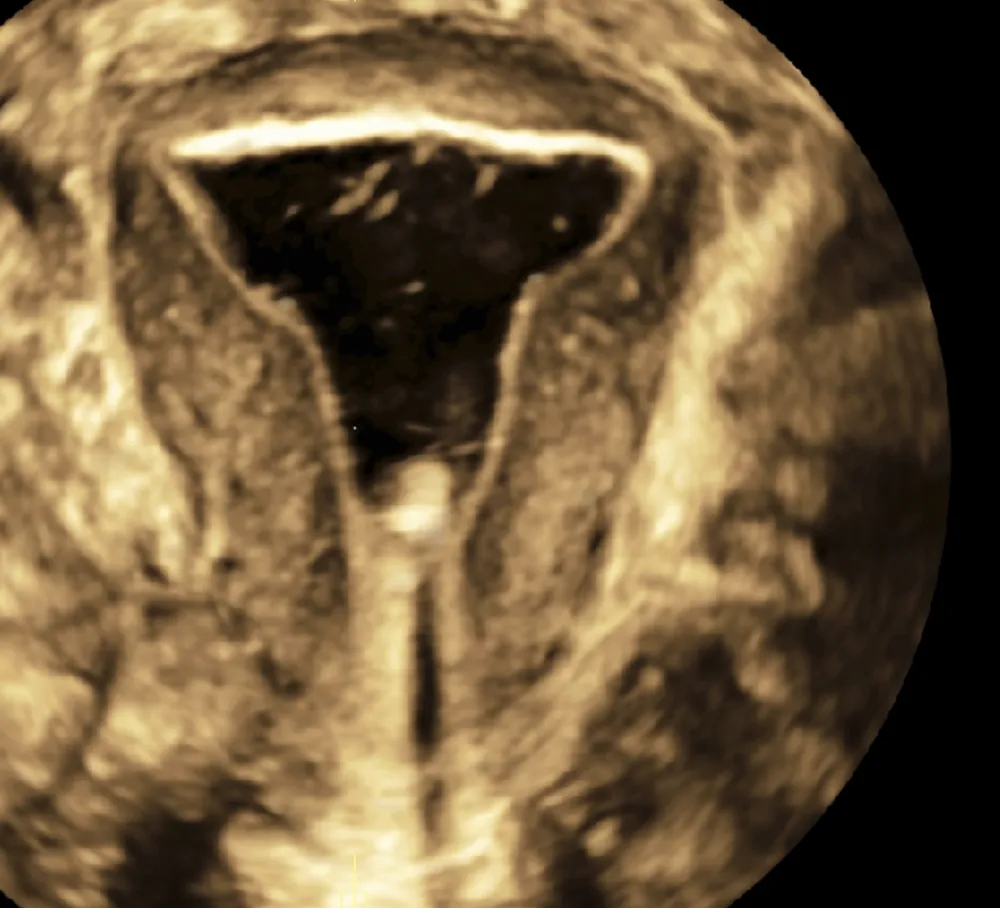
What is Hysterosalpingo Contrast Sonography (HyCoSy)?
A Hycosy is a simple and usually well tolerated ultrasound procedure used to assess the patency of the fallopian tubes, as well as detect abnormalities of the uterus and endometrium. The test uses agitated saline as a contrast agent to assess for blocked fallopian tubes. Occluded (blocked) fallopian tubes are a common cause of infertility.
Tubal blockage can occur with a number of conditions including previous pelvic infection, severe endometriosis, previous pelvic surgery and pelvic adhesions. Many women will be unaware that these conditions are present and that tubal blockage has occurred. A normal fallopian tube is not seen with regular ultrasound. A detailed fertility ultrasound is always performed in conjunction with a HyCoSy procedure including endometriosis assessment.
How Can a HyCoSy Help?
HyCoSy is typically performed in the first half of the menstrual cycle and does not require general anaesthesia. Most women experience mild to moderate cramping during the procedure, which usually settles quickly.
Our visiting gynaecologist, Dr Alice Robinson, is dedicated to providing a comfortable, respectful, and supportive environment throughout your examination. The procedure is performed with precision and care, and findings are communicated promptly to you and your referring clinician to guide the next steps in your care.

Infertility Investigation
Can assist in finding a cause for infertility.
Uterine Cavity Detection
Can detect uterine cavity problems such as endometrial polyps, submucosal fibroids and congenital uterine abnormalities (such as a uterine septum).
Improved Pregnancy Chances
Flushing the fallopian tubes with Saline +/- Lipiodol (poppy seed oil) may increase your chances of pregnancy.


Understand Your Fertility Health Better. Schedule Your Scan Today.
We are here to provide clarity, confidence, and exceptional care.

Meet Dr Alice Robinson
Dr Alice Robinson is an Obstetrician and Gynaecologist who trained in South Australia, before completing subspeciality training in O&G ultrasound in Melbourne. Dr Robinson is experienced in the diagnosis and management of fetal abnormalities, including diagnostic procedures (CVS and amniocentesis) and intrauterine fetal procedures. She is also passionate about improving ultrasound diagnosis of gynaecological abnormalities such as endometriosis and ovarian cysts.
In addition to her role at Specialist Imaging Partners, Dr Robinson is a consultant at the Women’s and Children’s Hospital, and a clinical lecturer at the University of Adelaide. She has been an invited speaker at national and international meetings, and has published research on topics including the detection and subsequent management of fetal growth restriction, fetal diagnosis and therapy, placental disorders and endometriosis.
Why Patients and Providers
Choose Us for HyCoSy
Detailed Reports and Concise Results
We provide referrers with comprehensive reports that deliver clear, clinically meaningful results to support decision-making.
Compassionate, Patient-centred Care
Receive a personalised service from a small team of experienced professionals, ensuring attentive care for every patient.
Trained team
Rely on a team recognised for its extensive experience and significant contributions to medical research and education.
Advanced Diagnostics for Complex Cases
We provide detailed ultrasounds and clarification through second opinions for precise and trustworthy diagnostics.
Specialised Women’s AND Children’s Health Care
Benefit from pioneering expertise in endometriosis, paediatric bowel ultrasound and exclusive procedures such as hysterosalpingography (HSG) and 3D/4D pelvic floor ultrasound for prolapse and incontinence.
Advanced Imaging Technology and Techniques
State of the art equipment with leading applications in Women’s Health and
Paediatrics.


What Happens During a HyCoSy Procedure?
Approximate Appointment Length: 45 MinutesInitially a routine transvaginal ultrasound is performed to assess the uterus and ovaries including a detailed assessment for endometriosis. After this, the first part of the HyCoSy is like a pap smear, with a vaginal speculum gently inserted into the vagina to visualise the cervix.
The cervix is then cleansed with antiseptic solution to decrease the risk of infection. A thin flexible balloon catheter is inserted through the opening of the cervix, so that the catheter lies within the endometrial cavity. Inserting this intrauterine catheter does not usually cause discomfort.
A tiny balloon at the tip of the catheter is slowly inflated with saline – this is necessary to stop fluid leaking back out through the cervix during the test. Inflating this tiny balloon can cause some discomfort. The vaginal speculum is then removed, with the catheter remaining inside the uterus. Next, the transvaginal ultrasound (internal scan through the vagina) is used to image the uterus.
Initially, a small amount of sterile saline is introduced into the endometrial cavity through the catheter. This saline distends the endometrial cavity, allowing assessment of the contour and shape of the cavity.
Next, a small amount of a contrast agent (agitated saline) will be introduced through the catheter. The doctor will be looking at both fallopian tubes, to see if the tubes are patent. If the contrast can be seen flowing through each tube, and spilling out the end of the tube into the area around the ovaries, the tubes are patent.
If requested, 3- 5 ml of Lipiodol (poppy seed oil) is inserted through the same catheter into each fallopian tube until spill is seen on both sides. This is contraindicated if the tubes are blocked. Lipiodol is administered to assist with increased fertility rates by reducing possible inflammation. The transvaginal ultrasound and catheter are removed at the end of the test.

How Should I Prepare For a HyCoSy?
It is important that you are not pregnant when you have this test, as the procedure can disturb the implantation of the embryo. If there is a possibility that you are pregnant, the procedure will need to be postponed until your next menstrual cycle. If you are unsure, we advise that you perform a pregnancy test prior to the procedure.
If your periods are infrequent or irregular, please discuss the optimal time for this test with your doctor or our reception staff.
Do I need pain relief for this test?
The level of pain experienced during the HyCoSy is variable, but most women experience only mild to moderate cramping period-type discomfort during the test. We suggest that you take 2 naprogesic tablets 30-60 minutes before the procedure, to minimise your discomfort. No anaesthetic is required for this procedure.